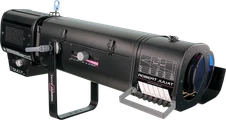
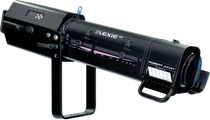
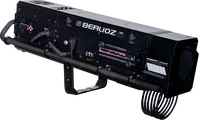
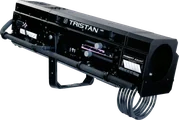
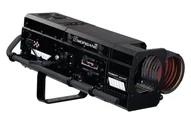
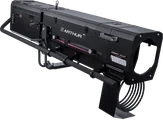
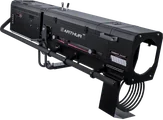
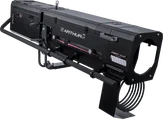
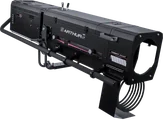
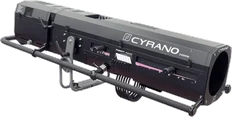
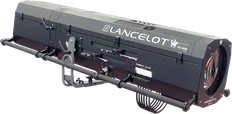
Find followspots for your throw distance, rank them by target illuminance and compare up to three configurations.
Measure along the beam from the fixture to the performer.
Enter a distance greater than zero (for example, 55.5). Use a decimal point or comma, without spaces or units.
The converted distance would exceed 24 characters. The original distance and unit were kept.
Optional. Leave blank to use the throw guides.
10–100,000 lx. Far left clears the target.
Enter a lux target greater than zero (for example, 1000). Use a decimal point or comma, without spaces or units.
How the lux estimates work
Centre-beam illuminance is estimated as the published intensity in candela divided by the throw distance in metres squared (lx = cd ÷ m²). Results cover the distances tabulated in each datasheet and can differ slightly from its rounded lux values.
With a target, the selector ranks the configurations whose tested zoom settings bracket it first, then by how close the nearest tested setting is. Results use standard optics and the 5,000 K setting for variable-white models. The zoom angles are the datasheet test settings. Check beam size and colour rendering in the linked sheet.
Current followspots
Standard configurations. Select two or three to compare.
The specification sheets cover this distance. The comparison chart gives no separate throw guide for these configurations.
How to read these figures
For full data and installation requirements, consult the product specification sheet.
Photometric spans show the first and last distances tabulated in the linked specification sheet.
Field output is the range of fixture lumens reported at the tested zoom settings. Colour temperature and CRI are measured values where available. For tunable white, output is shown at the 5,000 K setting and CRI spans the reported colour settings. Values marked “lamp” describe the lamp. For Cyrano and Lancelot, the sheets give the manufacturer’s lamp rating only.